Research
Current Research Under CTCHT
THREAD Lab
The Technology for Health, Resilience, Equity and Decision-Making (THREAD) lab is a community-based research initiative to foster sustainable community transformation and health equity within socially and economically marginally neighborhoods through the co-design and development of digital innovations with community residents. We are currently working with residents in the Avondale neighborhood to iteratively shape the development and piloting of the Avondale Digital Tool (ADT), a neighborhood based, human-centered digital twin. Unlike mainstream digital twins typically used in manufacturing, healthcare, and engineering industries to improve efficiency and quality outcomes, the ADT is a live, virtual, interactive model of the Avondale neighborhood that centers user objectives of personal well-being and community transformation. Ultimately, we envision this tool as digital civic infrastructure enabling community-driven sustainable community transformation and health equity within socially disadvantaged neighborhoods.
Relatedly, the THREAD lab Avondale study is co-producing a corollary tool for ADT development— a digital data governance framework that will guide the iterative development of the ADT, ensuring that community led priorities, values, and interests drive ADT product design and development. The framework will function as a living accountability document that centers community residents and their desire and ability to collectively drive bottom-up community transformation. Thus, unlike other forms of civic technology designed and used by policymakers, the ADT represents a uniquely democratic type of digital civic infrastructure that centers and builds the capacity of community residents to collectively determine their own futures.
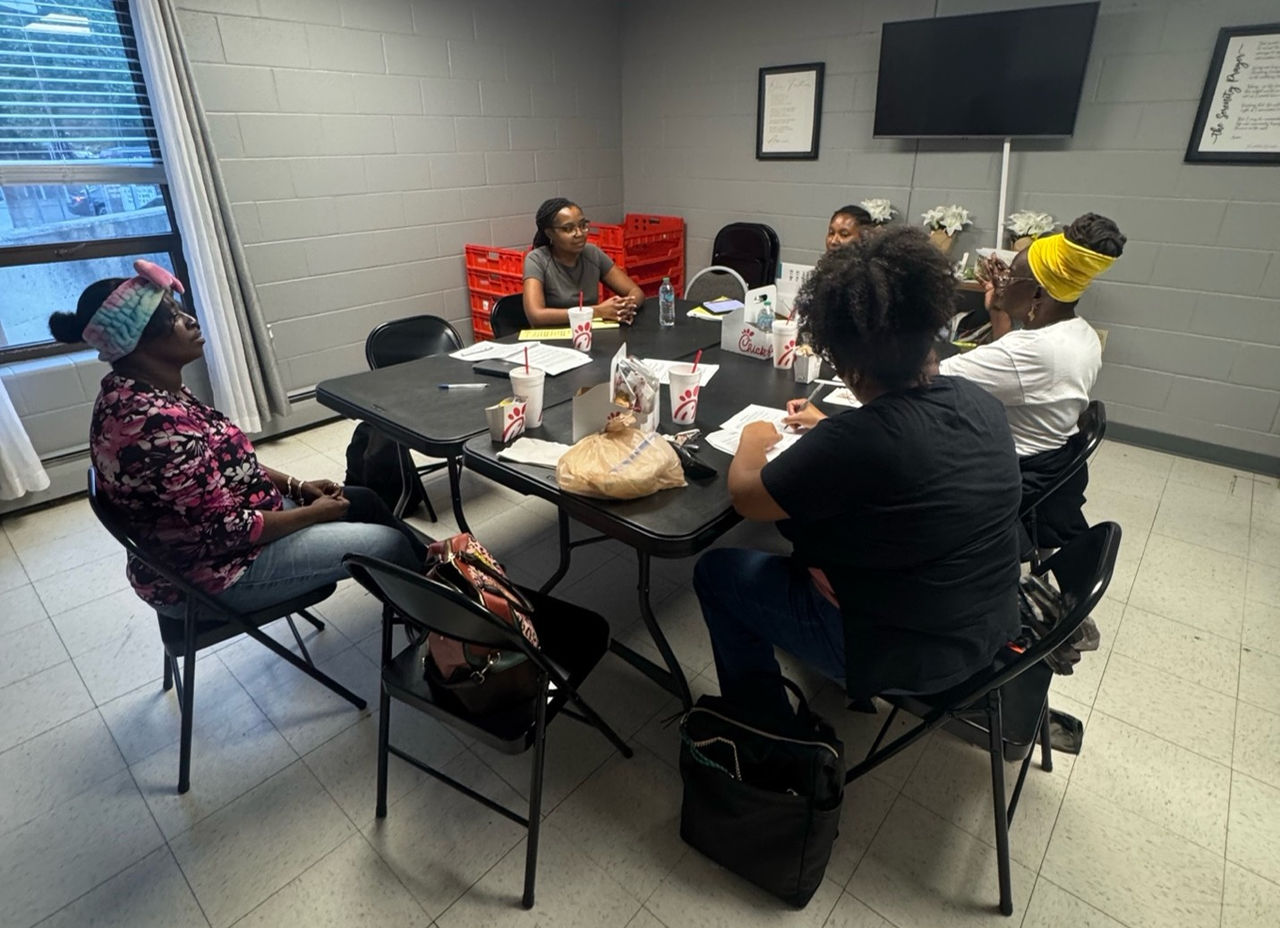
The THREAD lab reflects an intentionally cultivated academic-community partnership between a highly interdisciplinary team of researchers at the University of Cincinnati and a burgeoning team of community residents (community liaisons) who are trusted, dedicated leaders within the neighborhood. This community liaison team provides critical oversight, leadership, and partnership in this applied research study.
The THREAD lab is an initiative of the Center for Truth, Community Healing and Transformation (CTCHT) at the University of Cincinnati (UC). It is co-led by principal investigators Dr. Lauren Forbes and Dr. Kelly Merrill Jr. Faculty co-investigators include Ming Tang, Dr. Deigo Cuadros, Dr. Briana Simms, and Dr. Paris Wheeler. The THREAD lab is supported by the Center for Clinical and Translational Science and Training (CCTST), UC College of Arts and Sciences Discovery Amplified, and UC Action Collaborative.
Homegrown Study
Local food systems led by grassroots community-based organizations (CBOs) and small businesses are often driven by social impact objectives, and they typically face critical resource constraints. Digital tools can help them to overcome some of these challenges, but they are rarely designed with the input of these and other limited resource communities in mind. They are generally developed in isolation from end users. This results in inaccessible tools with limited relevance to and utility for these communities.
To address these challenges of emergent, socially-driven local food systems, our team has co-designed, built, and piloted a scalable, digital tool known as the Homegrown Data Management System (Homegrown) to support data validation and standardization, network collaboration, and evidence-based decision-making among local food systems actors. The tool addresses systemic challenges that many small businesses and non-profit organizations face in securing institutional contracts and the challenges that sponsors and managers face in coordinating dynamic food-based activities across disparate types of partner organizations with varying levels of market readiness. The system was originally created as a web-based platform to support a community farmers' market and community supported agriculture (CSA) program. It is now being scaled into a mobile application to support simultaneous use across multiple networks of local food systems operating types of food programs that connect purchasers (customers and sponsors) to suppliers (vendors and managers).
Previous Research Under CTRHT
- Race and Racism in Cincinnati toolkit
- Calls for calm are acts of violence Opinion article by Christina D. Brown
- Social Vulnerability and Equity: The Disproportionate Impact of COVID-19
- Social Construction and the Criminalization of Identity: State-Sanctioned Oppression and an Unethical Administration
- ‘Pose’ Celebrates Stories The Rest Of The World Ignores